Discover Montgomery’s civil rights history, cultural landmarks, and historic districts at your own pace. Select a tour to view its full gallery, or use search to explore places across all tours.
Available Tours
Search Places
Search Results
Showing matching places across all tours. Use “Part of:” on a card to jump to its full tour.
Walking in the Footsteps of Martin Luther King Jr.
A self-guided walking tour of spots on campus related to Martin Luther King Jr.’s time on ASU’s campus.
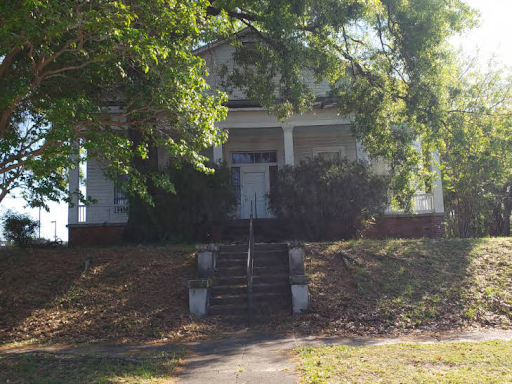
1010/1020 West University Drive – Former Spot of ASU Faculty House
In 1953, ASU Vice President Dr. Joseph T. Brooks, a classmate of Rev. King at Morehouse College, wrote to King’s parents in an attempt to bring King to Montgomery. When King visited to conduct his trial sermon at Dexter Avenue Baptist Church in October 1954, King stayed here in the Brooks’ home. Soon after, King became the minister at Dexter and moved his family to Montgomery.
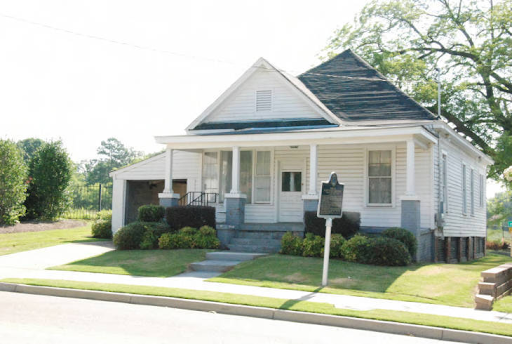
First Baptist Parsonage – Abernathy House
Martin Luther King Jr. visited this house when interviewing at Dexter Avenue Baptist Church in 1954. King and Ralph David Abernathy became close friends and collaborators after King’s move to Montgomery. The parsonage later hosted a May 1961 press conference announcing the continuation of the Freedom Rides.
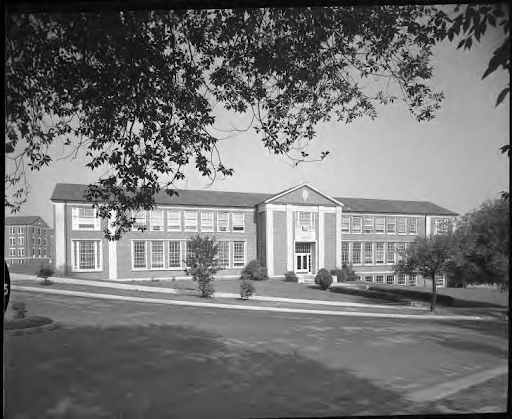
G.W. Trenholm Hall – Former ASU Library
Named after ASU’s fourth president, this building once housed the university library. While living in Montgomery, Dr. King completed his doctoral dissertation using the ASU library here, with permission from President Harper Councill Trenholm.
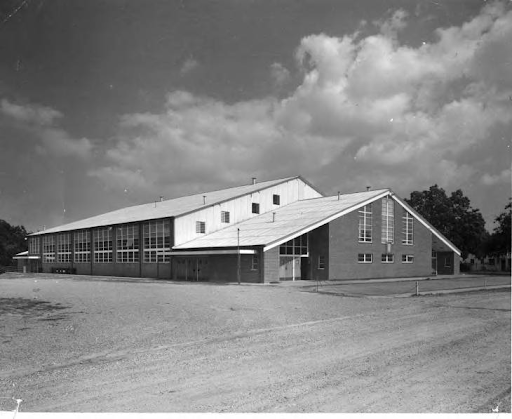
Shuttlesworth Dining Hall – Former Charles Johnson Dunn Sports Arena
Originally built as a multi-use arena, this space hosted major campus events. Dr. King delivered speeches here in 1955 and 1958, and students gathered in this building upon learning of his assassination in 1968.
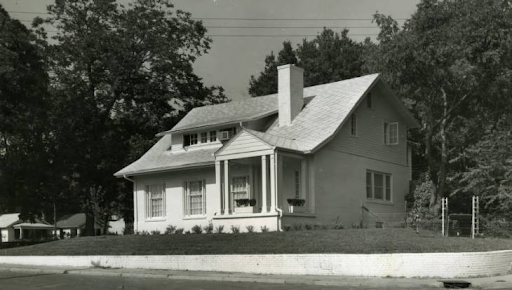
Friendship Manor
Once the ASU president’s home, Friendship Manor hosted Dr. King during key moments of his time in Montgomery. After his home was bombed in 1956, King stayed here, and students later gathered on its lawn following news of his assassination.
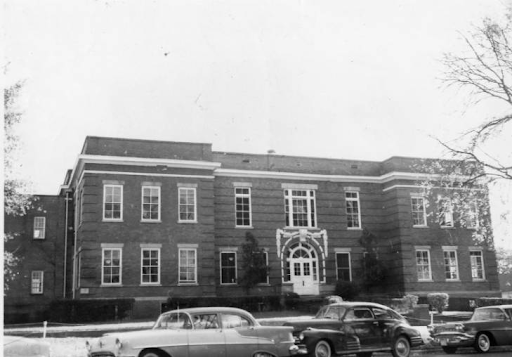
Tullibody Fine Arts Center
Built on the site of Old Tullibody Hall, this location connects to Coretta Scott King, who taught piano and held recitals here during the Kings’ time in Montgomery.
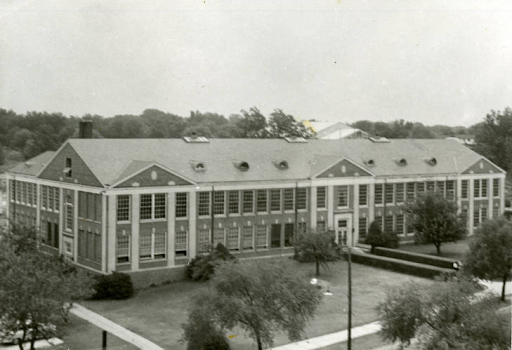
Paterson Hall
Named for ASU president William Burns Paterson, this building hosted meetings attended by Dr. King and Ralph David Abernathy during the Montgomery Bus Boycott era.
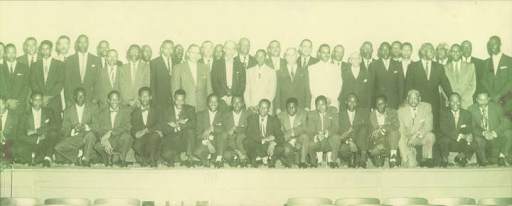
Alpha Phi Alpha Marker
Dr. King joined Alpha Phi Alpha in 1952 and later became a member of the Alpha Upsilon chapter in Montgomery. His fraternity brothers supported him throughout the Montgomery Bus Boycott and other civil rights activities.
Walking in the Footsteps of Rev. Ralph David Abernathy
A self-guided walking tour highlighting locations connected to Rev. Ralph David Abernathy’s life, student leadership at Alabama State University, and his role in the modern civil rights movement.
Abernathy House
This house served as the parsonage home for the First Baptist Church. Rev. Ralph David Abernathy occupied the home from 1952 to 1961 while pastoring the church. Planning meetings for the Montgomery Bus Boycott were hosted here, and the parsonage was bombed in January 1957. In May 1961, it was the site of a press conference announcing the continuation of the Freedom Rides.
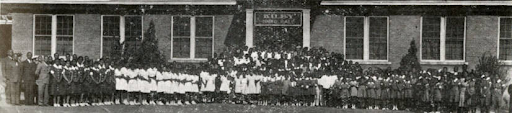
Kilby Hall
As a student at Alabama State University, Abernathy led a campus-wide hunger strike protesting inequities in the dining hall. His leadership resulted in immediate improvements and marked an early example of organized student activism.
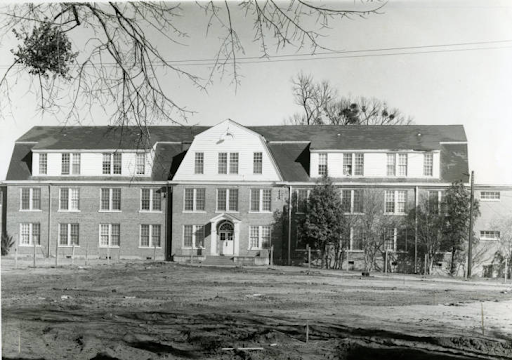
Paterson Hall
While a student at ASU, Abernathy served as superintendent of student Sunday School here. Later, he attended meetings in this building with Martin Luther King Jr., reinforcing its connection to early civil rights organizing.
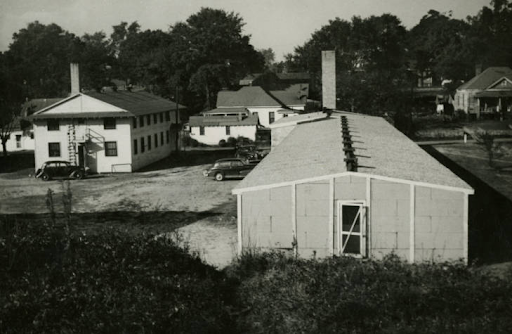
Former Site of Army Barracks
These barracks housed returning veterans after World War II. Abernathy organized complaints about poor living conditions and successfully advocated for improvements, sharpening the leadership skills he later used in the civil rights movement.
Tullibody Auditorium
On this site, Abernathy performed in the production “Nat Turner” in 1950 as part of ASU’s Negro History class, reflecting the cultural and educational life of the campus.
Shuttlesworth Dining Hall
Formerly the Charles Johnson Dunn Sports Arena, this space hosted Abernathy’s 1968 commencement address following the assassination of Martin Luther King Jr., where he emphasized the importance of continued militant protest and student leadership.
Student Activism at ASU Tour
A self-guided walking tour featuring places tied to student-led protests and organizing connected to Alabama State University.
First Baptist Parsonage – Abernathy House
On the night of February 24, 1960, several ASU students came here for advice on a sit-in demonstration. Rev. Ralph David Abernathy counseled the students, and the next day they carried out a sit-in at the Montgomery County Courthouse snack bar.
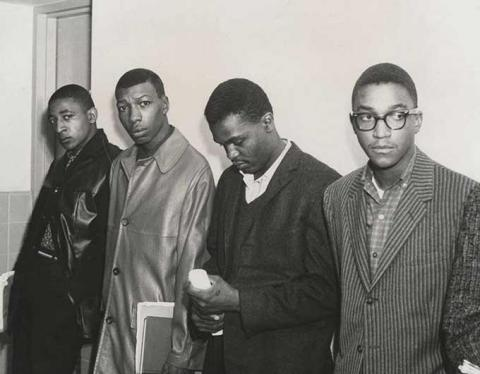
Corner of Jackson and North University
Site of the former Hornet Grill, where 29 students met on February 25, 1960 before marching to the Montgomery County Courthouse for a sit-in at the snack bar. After the action, state officials moved to punish participants, sparking broader student solidarity and unrest.
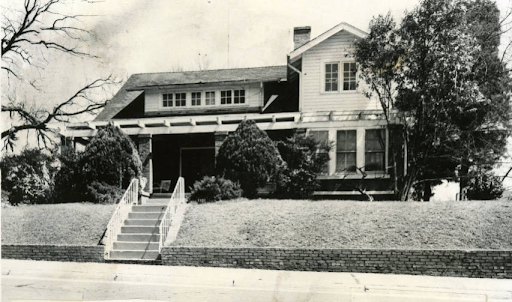
Friendship Manor
Following Martin Luther King Jr.’s assassination on April 4, 1968, ASU students gathered on this lawn, calling for classes to be suspended to mourn. The site is also connected to campus unrest following the Selma to Montgomery March in 1965.
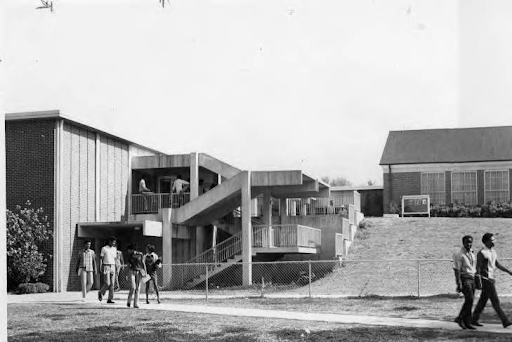
Student Union / Dining Hall
In 1969, following the firing of activist Alvin Holmes, students occupied the college union and dining hall. Protesters issued a list of demands, including a Black Studies program and ending military recruitment on campus. The administration responded by closing the school and removing students from campus.
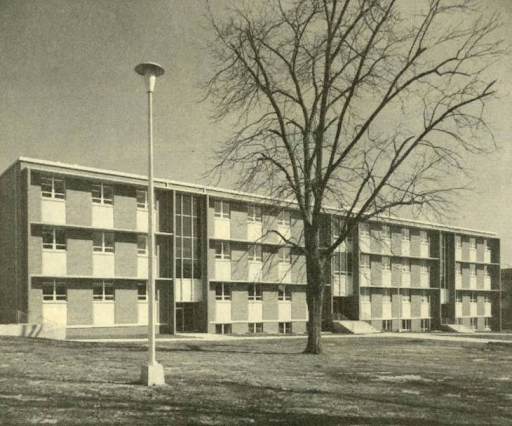
W. H. Councill Hall
ASU’s administration building and the site of multiple student takeovers. In 1965, students occupied the president’s office after the Selma to Montgomery March. In 1992, students staged an overnight sit-in here, demanding changes including lowered parking fees and improvements to campus resources.
ASU Historic District Tour
A self-guided walking tour highlighting buildings and landmarks within Alabama State University’s historic district.
Patterson Hall
This two-story brick building originally housed nine regular classrooms, two classrooms for Plastic-Graphic Arts, three classrooms for Home Arts, one double classroom for the Communications Laboratory, and one lecture-assembly room with seating for 340 students. The building was named for ASU president William Burns Paterson. The attic was remodeled to serve as temporary quarters for the library. The library was moved to G. W. Trenholm Hall in 1948. The building then was used to house the central administration offices, classrooms and offices for Student Financial Aid, Career Planning and Placement, Co-operative Education Reading Center and ROTC. The administrative offices were moved to Councill Hall in 1955. This building is a contributing resource on the National Historic Register.
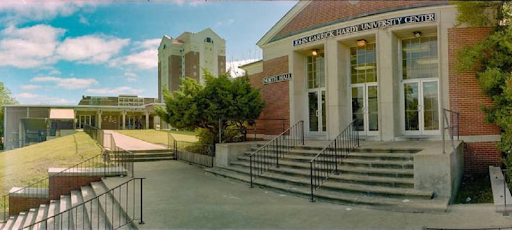
North Dining Hall
Opened in 1948, North Dining Hall was housed in the former University Center.
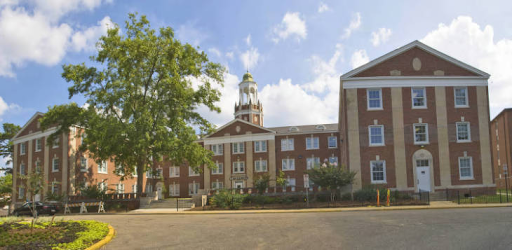
Jo Ann Robinson Hall (formerly Bibb Graves)
Built in 1929, the iconic 37,640 square-foot Jo Ann Robinson Hall is a three-story U shaped building with an octagonal cupola atop the central block. The residence hall for freshmen women was built with 100-bedrooms, offices, social rooms, a guest suite, and a service room. The building was originally named after depression era Governor, David Bibb Graves. In his 1926 election as Governor, Graves benefited from his position as Grand Cyclops of the Montgomery Ku Klux Klavern. Known as a champion of education in Alabama, the name Bibb Graves could be found on buildings at public universities throughout the state. In 2022, the hall was renamed for Jo Ann Robinson, ASU faculty member and member of the Women’s Political Councill who played an integral role in the Montgomery Bus Boycott.
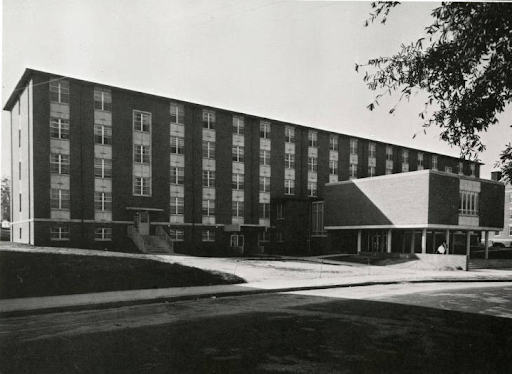
Simpson Hall
Built in 1966, this five-story brick women’s residence hall is named for Willease Rosa Simpson who served the university for 43 years as its secretary-treasurer. This is a four and one-half story, fireproof, brick air-conditioned building that served as a women’s residence hall and a men’s residence hall at different times. The residence hall has 101 bedrooms, a lounge, and administrative as well as storage and utility areas. A separate ground floor entrance provides access to the Health Center and the infirmary which offers 24-hour service. This building is a contributing resource on the National Historic Register.
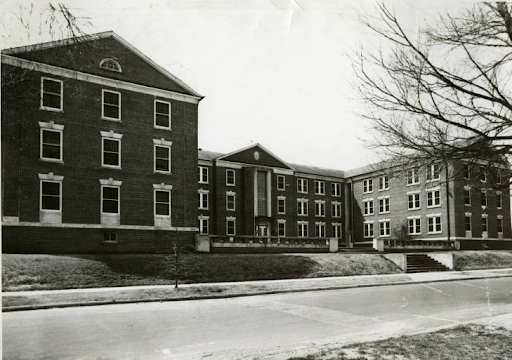
Abercrombie Hall
Built in 1946, this 40,000 square-foot, three-story brick, U-shaped Georgian Revival building serves as a residence hall with 130 bedrooms for women. The hall is named in honor of John W. Abercrombie, who served three terms as State Superintendent of Education between 1889 and 1928. In addition to the dorm rooms, the building was originally constructed with offices, social rooms, and service rooms. In 1996 the dorm was converted to a men’s residence hall in order to accommodate a large number of male freshmen. Abercrombie Hall was renovated from top to bottom in 2008. After the renovation, the Hall featured suite-style living accommodations on all three floors. Each suite has two bedrooms, which include beds, study desks, rocking chairs, wardrobes, a couch, and a television stand. In addition, Abercrombie Hall has laundry facilities and study rooms on each floor, as well as a computer lab and visitors lounge. This building is a contributing resource on the National Historic Register.
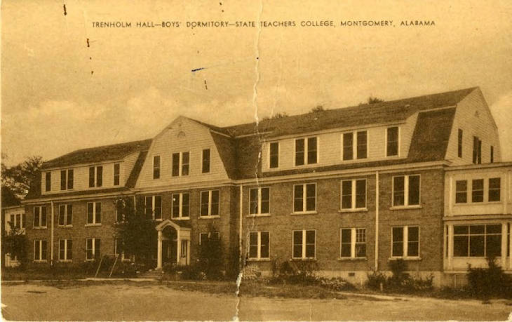
George Washington Trenholm Hall
Built in 1948 as a boy’s dormitory for the State Normal College, which would become Alabama State University.
Hornet Stadium
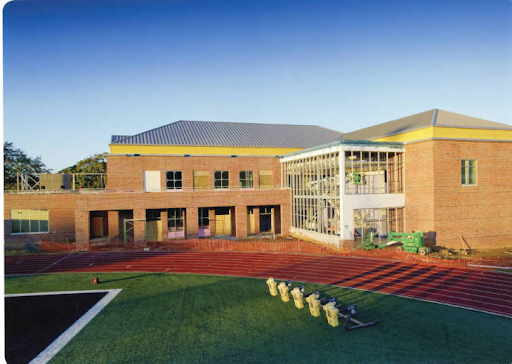
A poured concrete wall surrounds this athletic field. There are poured concrete grandstands and a concrete admission gate on the northwest corner. The gate is composed of three entrance portals and four ticket windows. Situated within the stadium walls are a football field, baseball diamond, an eight-lane track, and a lighting system for night games. In 1953, a new three-story press box was constructed, with concessions on one floor, space for the president and his guests on the second floor, and a room for sportswriters on the third floor. It served as the primary location for home football games until the construction of ASU Stadium in 2012.
Lockhart Gymnasium
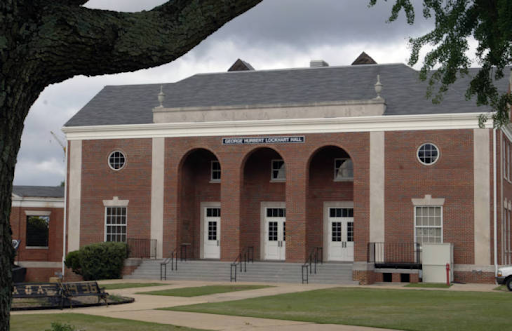
This two-story T-shaped 47,553 square-foot brick complex houses offices for volleyball, soccer and track, and field programs. The facility is named for the George Herbert Lockhart, instructor, coach, and head of the Physical Education Department for 42 years. The 1939 brick structure provides 80’ x 140’ of floor space for physical educational activities, intramural sports, and social functions. Faculty from Tuskegee Institute, Louis B. Frye and D. F. White, drew construction plans. Waverly A. Williams, a Black contractor with the Works Progress Administration (WPA) was superintendent in charge of instruction. The gymnasium has a gable cross hip roof with a Georgian Revival style façade, stone front parapet, and decorative urns. In November of 1955, upon an invitation from Pullman Porter E. D. Nixon, Black Congressman Adam Clayton Powell encouraged a large crowd of Black citizens to use their economic leverage to fight racial discrimination. A month after the Congressman left Montgomery.
Beverly Hall
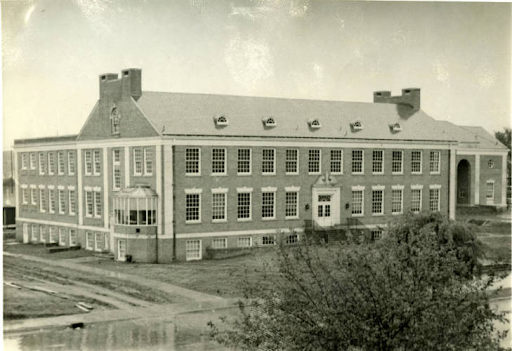
Built in 1939, the two-story Georgian Revival style building is named in honor of John William Beverly, the first black and the first alumnus to become president of Alabama State University. Beverly Hall had two large lecture rooms each with seating for 125 students. There were two darkrooms for developing photographs and classrooms for social as well as physical sciences. There was also a small anthropology museum on the lower level. Built on a full basement, two end chimneys set off the side gable roof and five eyebrow dormers. In 1968, Beverly Hall renovations included the development of an outdoor court as an auditorium for discussion, conferences, etc. This building underwent a major renovation in 2018.
Cultural District Walking Tour
The Cultural District of ASU is situated along Harris Way on the eastern side of the campus. The district consists of several historic resources including the Montgomery Interpretive Center on the Selma-to-Montgomery National Historic Trail, the Nat King Cole House, and the First Baptist Church Parsonage (Rev. Ralph Abernathy’s house). Exhibitions on the first floor of the University Library and the Civil Rights Memorial Gardens just south of the Library are also part of the University’s Cultural District.
Montgomery Interpretive Center
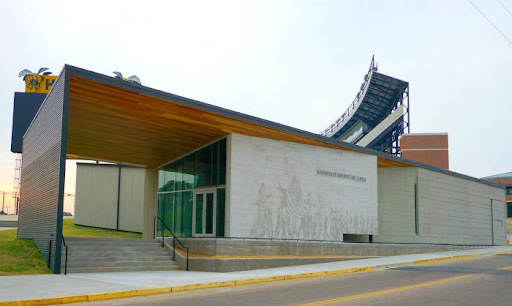
The National Park Service operates the Montgomery Interpretive Center along with centers in Dallas and Lowndes Counties along the Selma to Montgomery Historic Trail. In 1965, thousands of marchers led by Dr. Martin Luther King, Jr., walked the fifty-four-mile trail from Selma to Montgomery to draw attention to the need for federal voting rights legislation. Their efforts helped to usher in the 1965 Voting Rights Act.
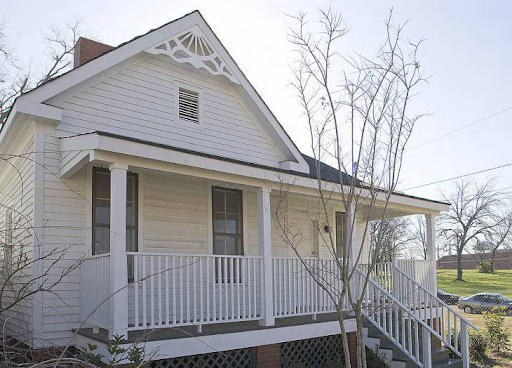
Nat King Cole House
Originally constructed in 1912, this cottage-style house is the birthplace of celebrated entertainer Nat King Cole. The house was once located on St. John Street in Montgomery’s Bel-Aire community and was moved several blocks north to make way for football stadium construction. ASU later purchased the house from Amos Harris, founder of the Nat King Cole Society.
Ralph David Abernathy House
Located at 1327 Harris Way, this former parsonage was home to Rev. Ralph David Abernathy from 1952 to 1961 while he pastored First Baptist Church. Planning meetings for the Montgomery Bus Boycott were held here, and the house was bombed on January 10, 1957. It also hosted a May 1961 press conference where Abernathy, Martin Luther King Jr., and John Lewis announced the continuation of the Freedom Rides.
Friendship Manor
Built in 1922 as the President’s Residence, this Craftsman-style home became known as “Friendship Manor” under the Levi Watkins administration. It was funded in part by a 1919 legislative appropriation, alumni, and friends of the institution, and it served as the home of presidents George Washington Trenholm, Harper Councill Trenholm, and Levi Watkins.
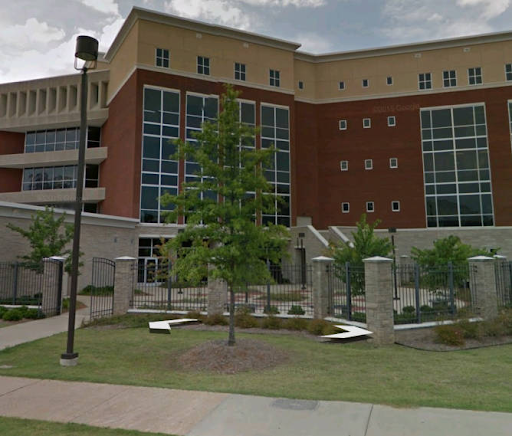
Civil Rights Memorial Gardens
The first phase of the Civil Rights Memorial Gardens, situated on the southeastern corner of the Levi Watkins Learning Center, was laid out as part of the 2011 renovations to the ASU Library and Learning Resource Center.
Monuments and Memorials Walking Tour
A self-guided walking tour highlighting monuments, memorials, markers, and sculptures on Alabama State University’s campus.
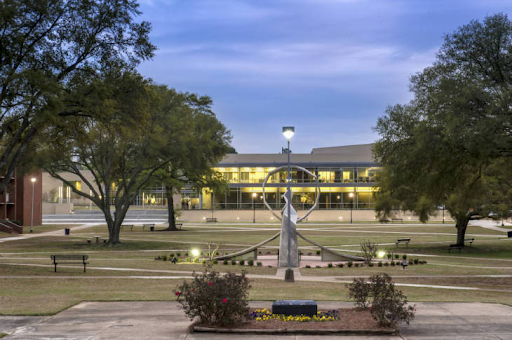
Academic Mall
The T-shaped lawn area at the heart of the campus is lined on both the south and north sides by academic buildings. Features on the Mall include benches, trees, a time capsule buried during the University’s centennial celebration, and the Equinox sculpture.
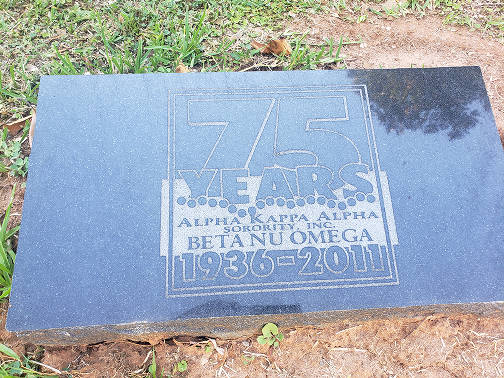
Alpha Kappa Alpha Sorority, Inc. Engraved Stone (2001)
The granite engraved stone entitled “75 Years Alpha Kappa Alpha Sorority, Inc. 1936-2001” is located in front of Friendship Manor. It commemorates the seventy-fifth anniversary of the Beta Nu Omega chapter of Alpha Kappa Alpha Sorority on the campus of Alabama State University.
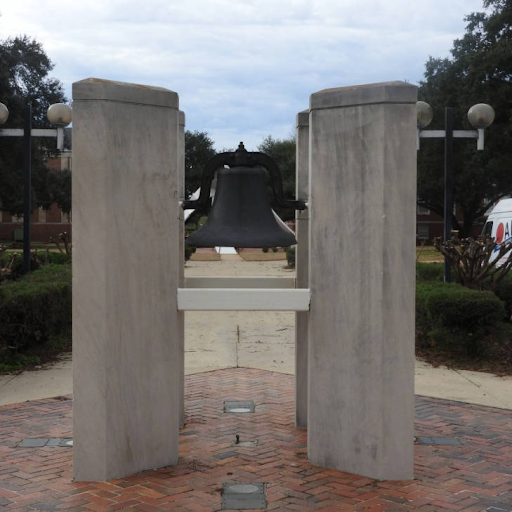
Memorial Bell
Located east of the Academic Mall in front of the Levi Watkins Learning Center, this bell once marked the beginning and end of classes at the State Normal School in Marion, Alabama. It was moved to Montgomery in 1887, later damaged in a 1904 fire, and continued to serve as a notable campus timepiece through subsequent decades.

The Brittain Reading Room (1985)
Located on the second floor of Beverly Hall, the Brittain Reading Room honors Dr. Joseph Matt Brittain, a distinguished history professor. He served as a Professor of History for seventeen years and became chair of the History and Political Science Department in 1960.
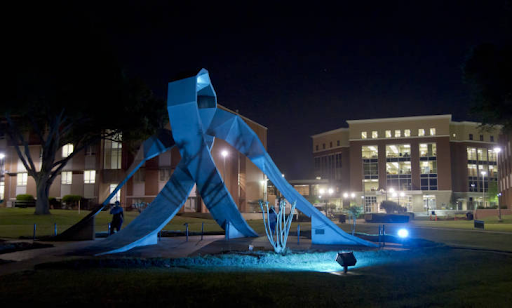
The Equinox (1974)
Erected during the University’s centennial celebration, this sculpture by artist-in-residence Larry Godwin was designed to spark new awareness of the aesthetic potential of the campus environment. Surrounding the work are four tribute monuments honoring civil rights leaders, Black educators, university leadership, and the labor and sacrifice of Black Americans.
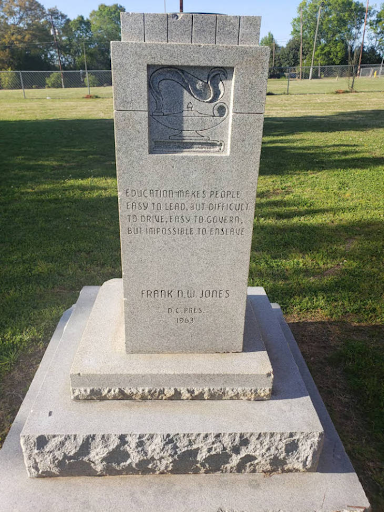
1963 Student Government Memorial
Located outside Kilby Hall, this granite monument was erected by the College Council (now the Student Government Association). It bears student names, includes a quote about education and freedom, and features a sundial with the inscription “Grow Old Along With Me, The Best Is Yet To Be.”
The Ollie L. Brown Afro-American Heritage Collection (1974)
Over four decades, librarian and book collector Ollie Lee Brown amassed an assemblage of African-American books. By integrating her collection into the library’s holdings, she significantly enriched the University’s African-American related titles and helped form a core of Special Collections.
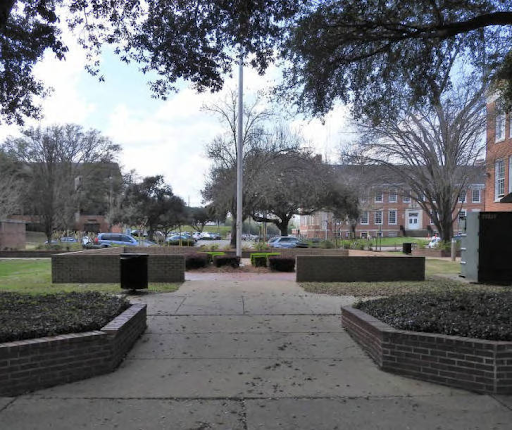
Thelma Rice Plaza
Constructed in 1981 between William Hooper Councill Hall and William Burns Paterson Hall, this plaza honors Thelma Austin Rice, a 1937 ASU alumna and longtime mathematics instructor known to generations of students as “Mama Rice.”
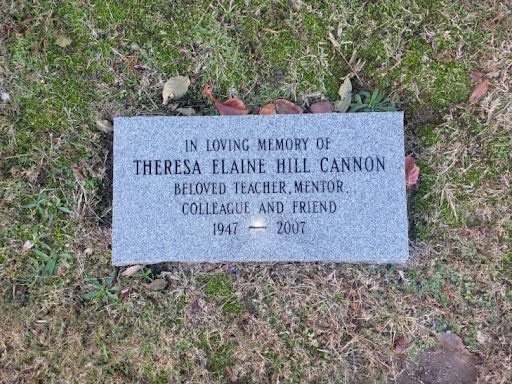
Theresa Elaine Hill Cannon Marker
An engraved granite memorial on the east side of George Washington Trenholm Hall honors Theresa Elaine Hill Cannon. She began teaching at ASU in 1977 and later studied in West African countries as a Fulbright Scholar before returning to teach history and humanities.
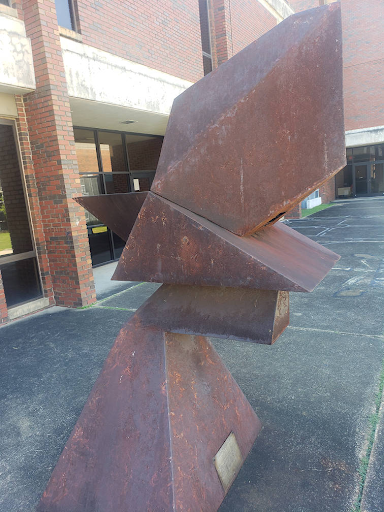
Third Movement Sculpture (c.1977)
This abstract eight-foot tall bronze sculpture, entitled “Third Movement,” was created by ASU students Bernice Washington, Larry Thornton, and James E. Tatum under the guidance of advisor Larry Godwin. It is located atop an outdoor patio on the south side of Tullibody Hall.
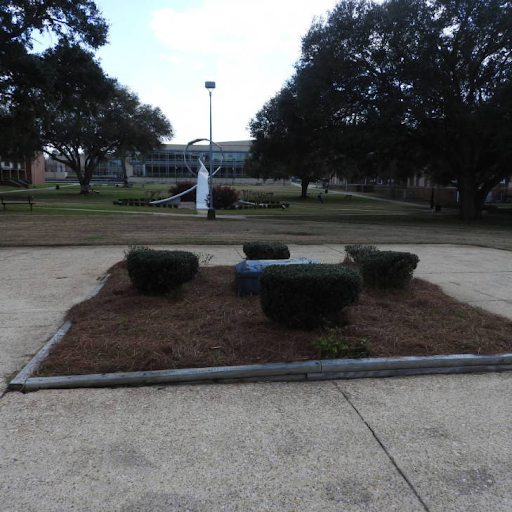
The Time Capsule (1974)
Buried in 1974, the time capsule contains 121 historical artifacts reflecting the period between the University’s founding and 1974. It was scheduled to be unearthed fifty years later in 2024 as part of the centennial-era plan for a future unveiling.
Govan Lounge (1963)
ASU dedicated the Govan Faculty Lounge in Councill Hall in recognition of a gift from Susie Johnson Govan. The lounge was established upon the death of this ASU alumna, an educator and Jeanes Supervisor for the Alabama State Department of Education.
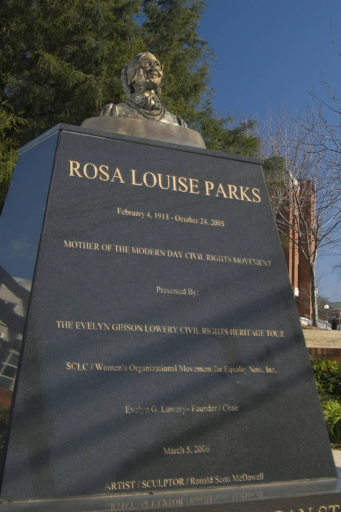
Rosa Parks Monument (2006)
Erected at the corner of South Jackson Street and North University Drive, this monument is near the previous site of the Alabama State College Laboratory High School from which Rosa Parks graduated in 1933. The black granite monument is topped by a bust of Parks and includes the inscription: “She sat down, so we can stand up.”